> For the complete documentation index, see [llms.txt](https://docs.twgamesdev.com/uhfps/llms.txt). Markdown versions of documentation pages are available by appending `.md` to page URLs; this page is available as [Markdown](https://docs.twgamesdev.com/uhfps/guides/save-load-manager/previous-scene-persistency.md).
# Previous Scene Persistency
1. To enable **Previous Scene Persistency**, go to the **Serialization Asset** located in the **Scriptables** folder.
2. Make sure the **Previous Scene Persistency** toggle is enabled within the Serialization Asset.
{% hint style="info" %}
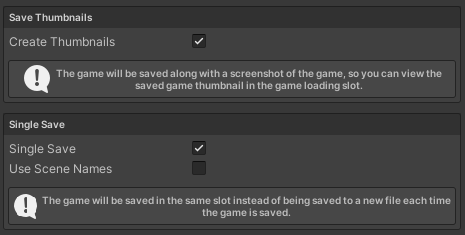
You can customize how the save will appear in the saves folder by modifying the settings within the **Serialization Asset**.
{% endhint %}
3. To load the next level and save the current level data for previous scene persistency, add the **Level Interact** component to the object (such as a door).
{% hint style="info" %}
Change the **Level Load Type** to specify how you want to load the next level and which data you want to transfer and load.
{% endhint %}
{% hint style="info" %}
Enabling the **Custom Transform** allows you to specify a custom player position that will be saved. This is useful when you want to return to a specific location, such as the position of the door you came from.
{% endhint %}